This post may contain affiliate links, including those from Amazon Associates. If you make a purchase through these links, I may earn a commission at no additional cost to you. Learn more about our affiliate policy.
There is something grounding about stepping into a thrift store with a sense of possibility. Rows of forgotten objects can feel overwhelming at first, especially when it is hard to imagine how anything might fit into a home that already feels cramped or unfinished.
In This Post
- How stylists train their eye to spot potential in overlooked pieces
- The categories that consistently yield the most elevated finds
- A simple decision filter that keeps clutter out of your cart
- How to build a small, manageable DIY practice from thrift finds
- Why a slow, intentional approach builds a more beautiful home over time
Many people retreat from thrift stores because they fear choosing the wrong thing or wasting money. Yet interior stylists build entire rooms from simple, affordable finds by approaching the process with intention and a trained eye.
Thrifting becomes far more enjoyable when you understand what to look for and how to evaluate it. You begin to see potential instead of clutter.
You also gain confidence in your ability to make choices that support the mood, palette, and comfort you want your home to hold. This post will walk you through a stylist inspired method for finding pieces that feel personal and high end without stretching your budget.
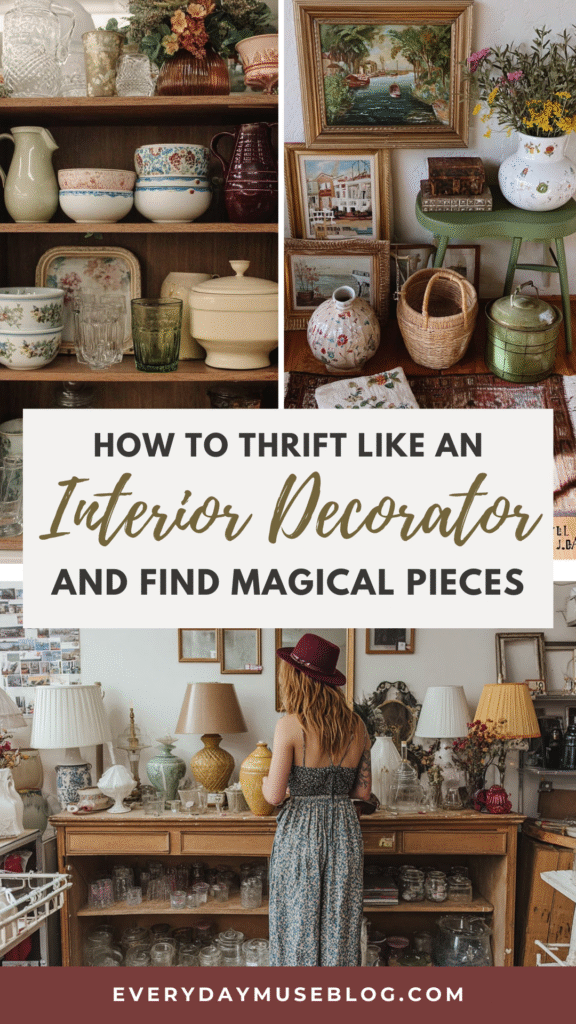
Step Into the Stylist Mindset
Focus on Form First
Designers look at shape and structure before anything else. A piece with a strong silhouette often becomes beautiful once cleaned, painted, or paired with something new.
This perspective reduces overwhelm because you are not reacting to chips, stains, or outdated finishes. You are looking for the underlying form that can elevate a small room.
Materials guide much of this intuition. Wood, ceramic, glass, linen, and metal tend to age well and can handle refinishing with ease. These materials also add quiet richness to a room and help you avoid decor that feels disposable.
Use a Personal Style Compass
It is difficult to thrift well without a guiding theme. A simple palette or mood board brings clarity to an otherwise chaotic environment. It also prevents decision fatigue because you can filter each object quickly by asking whether it supports your home’s direction.
This compass does not need to be complicated. Select a few colors that already exist in your space and pair them with textures you enjoy. Keeping these elements in a mood board on your phone so you have them for quick reference when shopping.
Know What to Look For Every Time You Thrift
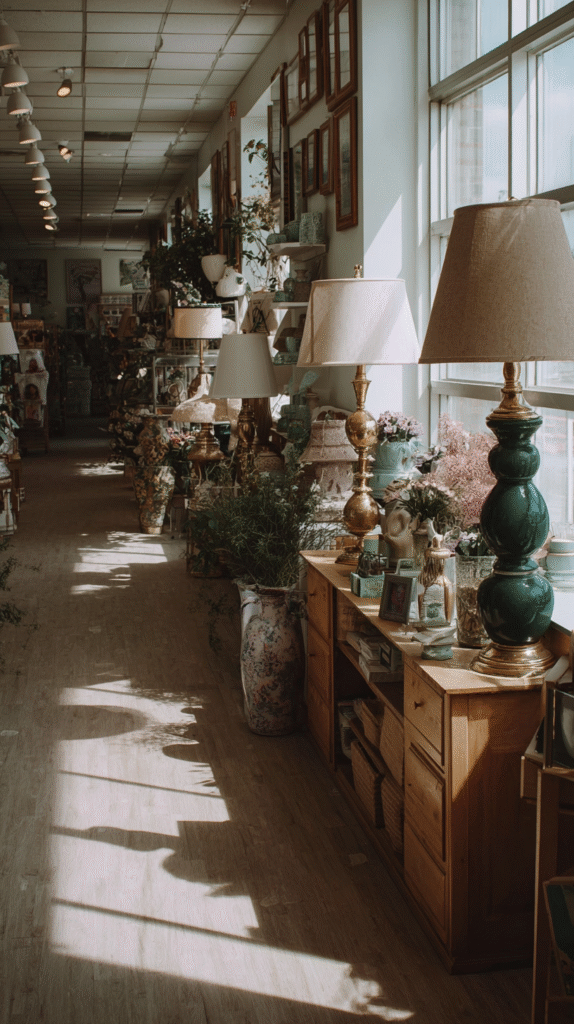
High Impact Categories Designers Prioritize
Some items consistently elevate a room once styled. Beginning with these categories makes thrifting feel purposeful instead of overwhelming.
Consider scanning for:
- Frames in solid wood or metal
- Lamps with sculptural bases
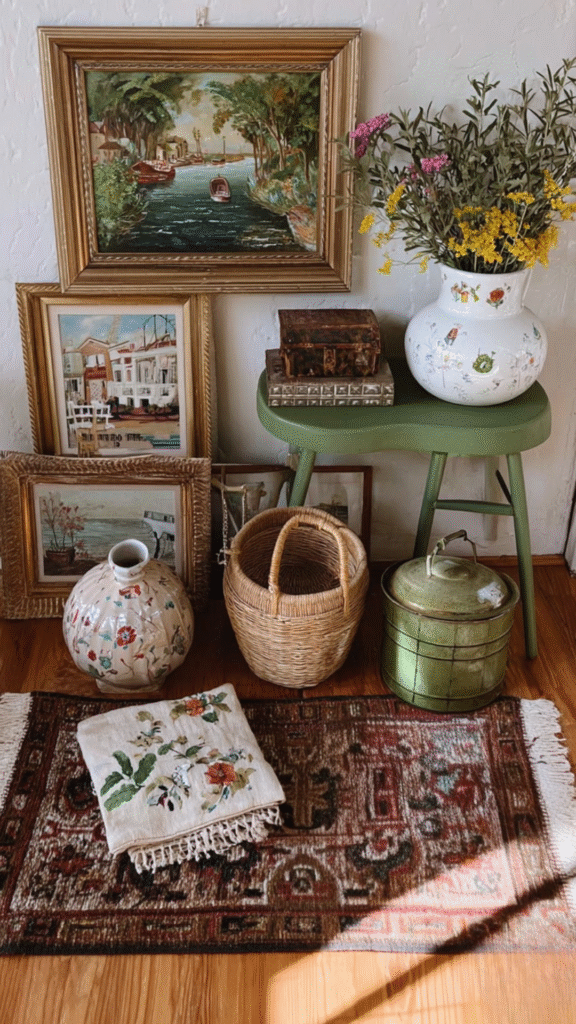
- Ceramics and vases in timeless shapes
- Bowls, trays, or catchalls with character
- Linen textiles that can be repurposed
- Books with beautiful spines or large formats
These pieces offer flexibility and presence. They allow you to layer height, texture, and color throughout a home without adding clutter.
Style Note: Neutral ceramics, brass accents, and linen shades consistently look elevated when paired with a simple color palette.
Unexpected Categories Worth Exploring
Thrift stores often hide useful items in sections most people skip. Exploring these areas can help you find pieces that feel unique and collected.
Try browsing:
- Fabric bins for vintage linens
- Candle sections for architectural candleholders
- Holiday aisles for classic tabletop pieces
- Kitchen shelves for simple glassware or wood trays
- Book rooms for oversized volumes that double as decor
The goal is not to buy everything. It is to train your eye to spot potential in everyday objects.
Budget Tip: Stained linens can become pillow covers or book wraps with very little effort.
Use a Stylist’s Filter to Avoid Clutter
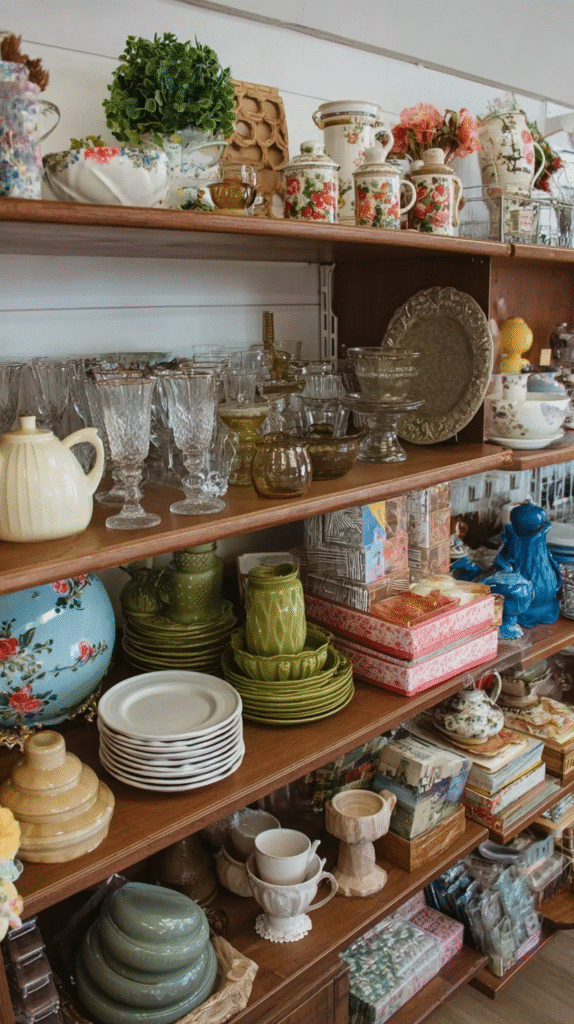
A Clear Checklist for Decision Making
Many people feel stuck while thrifting because everything seems either promising or uncertain. A simple filter solves this by giving you precise questions to ask before anything goes into your cart.
Before buying, check:
- Does this fit my palette or style compass?
- Is the material durable or easily refinished?
- Does the shape have intention or presence?
- Can this piece solve a styling gap in my home?
- Is the scale appropriate for the surface or room?
- Would I love this item if it were cleaned, painted, or reworked?
If an object only meets one or two criteria, it will likely become clutter. If it meets most or all, it has potential to bring real beauty into your space.
Scale, Texture, and Purpose
Small rooms depend on proportion. A lamp that is too tall can overwhelm a nightstand. A vase that is too small can disappear entirely. When you shop with scale in mind, you choose pieces that support balance instead of disrupting it.
Texture brings life to a room without requiring more items. Ribbed glass, woven baskets, matte ceramics, and natural fabrics add dimension that enhances your home visually and emotionally.
Renter’s Tip: Measure a few key surfaces before you shop. Knowing the range of heights or widths that work saves time and prevents returns.
Build an Intentional Thrift Routine
Start With One Category at a Time
Trying to search the entire store at once can create the same paralysis many people feel while decorating. Beginning with one category gives you structure and helps you develop an intuitive sense of what works.
For example, focus on lamps during your next trip. Notice how bases differ. Pay attention to silhouettes that feel timeless versus trendy. Once you feel steady in this category, move to frames or ceramics. A focused approach strengthens your eye and prevents overwhelm.
Choose One Manageable DIY Per Visit
High end looking thrift flips come from simple, repeatable transformations. A single frame project or lamp makeover can shift the feeling of a whole room. Keeping projects small protects your space from becoming a work zone and gives you achievable wins.
Some beginner friendly ideas include:
- Painting a wood frame and adding linen wrapped art
- Replacing an outdated lamp shade with a pleated or linen one
- Using matte spray paint to refresh worn ceramics
- Adding texture to artwork with Mod Podge
- Refinishing trays with natural stain
Browse the thrift flip diy and decor ideas category for lots more projects!
Here is an inspiring video from Anastasia Designs that goes through the entire process of shopping for treasures and easy DIY projects:
Let Your Home Become a Collected Story
Layer Pieces Over Time
A collected home does not come together in one weekend. It grows as you gather items that hold meaning and support the atmosphere you want to create. When each piece is chosen with intention, your home begins to feel personal, warm, and aligned with your taste.
There is comfort in letting the process unfold naturally. You do not need to fill every corner at once. Choose what feels right, style it, and allow your home to evolve at a pace that feels manageable.
Trust Your Eye as You Grow
Design intuition forms through repetition. Each small decision you make at a thrift store strengthens your ability to create a home that feels inspiring instead of stressful. Not every purchase will be perfect. Some pieces will be re-donated. This is part of the creative rhythm.
When you trust your instincts, thrifting becomes an enjoyable practice rather than a gamble. You begin to recognize pieces that will elevate your space before you even reach the checkout line.
Start Where You Are
The most beautiful homes are not the most expensive ones. They are the ones that feel collected over time, shaped by someone who knows what they love and is patient enough to find it. Every trip to a thrift store, even one where you leave empty handed, is a training session for your eye.
You already have better taste than you think. Trust it. Keep refining it. Let your home become the slowly gathered, deeply personal space it is meant to be.
Frequently Asked Questions
Q: How do interior stylists approach thrift shopping differently than most people?
A: Stylists look past surface imperfections to evaluate structure and form. They ask whether a piece can be cleaned, painted, or reworked before they react to its current condition. This shift in focus makes a crowded thrift store feel less overwhelming and far more full of possibility.
Q: What are the best home decor categories to focus on when thrifting?
A: Frames, lamps, ceramics, vases, bowls, and textiles are consistently the most versatile finds. These pieces can shift the mood of a room with very little effort, and they tend to hold up well to simple DIY treatments. Starting with one category per visit helps your eye develop faster than trying to evaluate everything at once.
Q: How do I stop buying things that turn into clutter?
A: Run each piece through a five-part filter before it goes into your cart: Does it fit your palette? Is the material durable or refinishable? Does the shape have real presence? Does it fill a genuine gap in your home? Is the scale right for where it will live? If it only meets one or two criteria, it will likely become something you donate back within the year.
Q: Do I need a big budget to thrift well?
A: Budget matters far less than mindset. A clear style compass and a slow, focused approach will consistently outperform rushing through a store with unlimited cash. Many of the most beautiful thrift finds cost under five dollars.
Q: What should I look for when thrifting for lamps?
A: Focus on the base, not the shade. A sculptural base in wood, ceramic, brass, or iron is easy to pair with a new shade and can look remarkably elevated at a fraction of retail cost. Keep scale in mind before you buy, since a lamp that overpowers or disappears on a surface will not serve the room the way you hope.
Q: How do I know if a thrift piece is worth taking on as a DIY project?
A: Check whether the bones are solid. Cracked ceramic, warped wood, or broken joints are harder to redeem. If the structure is sound, most surface imperfections can be addressed with paint, stain, Mod Podge, or a piece of fabric. The simpler the fix required, the more likely it is to actually get done.
Q: Can I build a cohesive home entirely through thrifting?
A: Yes, with patience and a clear visual direction. A consistent palette and a few repeated textures act as a thread that ties together pieces from completely different sources and eras. The key is choosing with intention rather than impulse, and giving your home space to evolve over time.
Q: What if thrift stores still feel overwhelming to me?
A: Start with one single category on your next visit, such as ceramics or frames, and spend the entire trip evaluating only that. Notice what feels timeless versus dated. Bring your palette reference on your phone. A focused first trip builds confidence faster than trying to absorb everything at once.