This post may contain affiliate links, including those from Amazon Associates. If you make a purchase through these links, I may earn a commission at no additional cost to you. Learn more about our affiliate policy.
Every creative soul deserves a small corner that feels like theirs. A place to pause, dream, and make something with their hands.
It doesn’t need to be a grand studio or even a separate room, sometimes the most inspiring spaces begin with a simple table tucked beside a window and a few objects that hold meaning.
If your apartment feels too small or too modern to create such a nook, you’re not alone. Many of us crave a space that feels warm and expressive but don’t know where to begin.
The secret lies in layering story and texture, combining the charm of vintage pieces with the practicality of everyday life.
With a few simple touches, you can transform even the smallest corner into a creative refuge that feels soulful and personal.
What Makes a Creative Corner Feel Vintage and Alive
Vintage style is about emotion more than design rules. It’s the warmth of an old wood desk, the softness of a linen cloth, the patina on a vase that has seen decades of flowers.
When you bring vintage elements into your home, you invite in history and imperfection, the very things that make a space feel human.
A creative corner thrives on this kind of energy. Instead of matching every detail, think in layers.
Pair a thrifted find with a modern lamp, mix framed prints with taped postcards, let your art supplies or notebooks stay visible. The charm comes from honesty, from seeing traces of your creativity rather than hiding them away.
Start by asking yourself: what do I want to feel when I sit here? Calm, inspired, cozy, free?
Let that emotion guide your choices more than any style label or color rule.
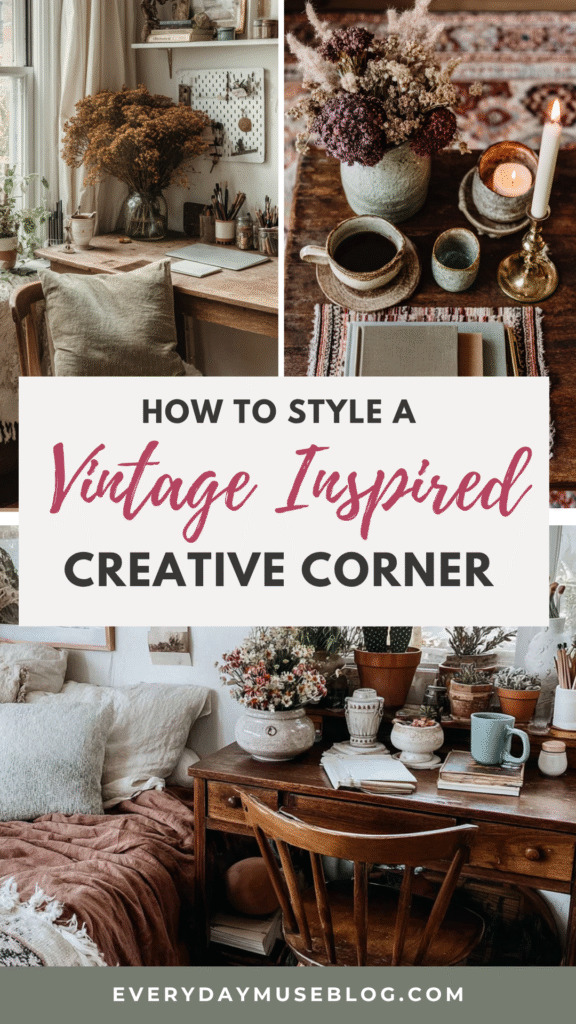
Define the Space with Intention
In a small apartment, creating a distinct zone can feel tricky. Begin by choosing a specific purpose for your corner, maybe it’s for journaling, writing, drawing, or working on small DIY projects. Defining the purpose helps you make every decision with focus.
Next, choose one anchor piece to ground the area. A vintage desk, an old dining table, or even a sturdy console can work beautifully. Don’t worry about scratches or mismatched legs, these details tell a story.
Place a rug or woven mat underneath to mark the boundary and instantly signal that this spot is special.
If your space is truly tight, think vertically. Use a wall section beside a window, a shelf, or even the end of a hallway as your base. Vintage-inspired corners don’t require much room, only intention and layering.
Mix Vintage and Modern with Ease
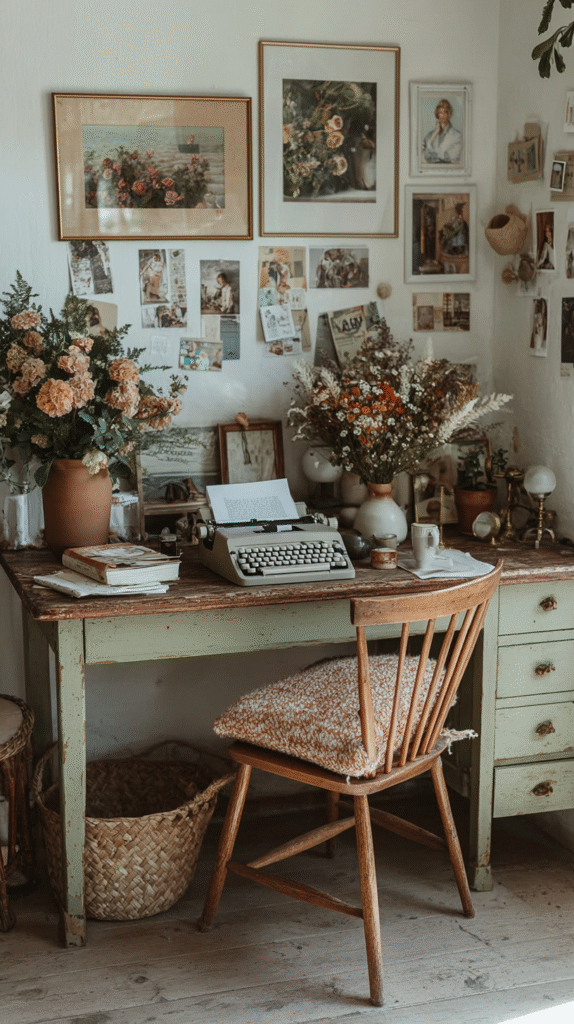
The best creative corners feel collected over time, not purchased all at once. Start with a soft neutral foundation like warm whites, faded greens, or pale wood tones. Then introduce vintage accents that bring depth and character.
Aged metal frames, pottery mugs, and textured fabrics will make the space feel grounded. Balance these with modern touches so it doesn’t feel too heavy: a clean-lined chair, a sleek lamp, or a fresh linen cushion. This harmony of old and new keeps the corner feeling fresh rather than nostalgic.
When thrifting, focus on small pieces that add personality. Think old art prints, glass jars, brass candlesticks, or books with worn covers. If something draws you in, trust it. Objects that spark curiosity or comfort will always find their place.
You may enjoy this full walkthrough of a mixed vintage/modern home art studio from Jeanne Oliver Designs. Although this is a full studio room, there are many ideas for storage and organization using vintage items that could inspire your creative corner.
Light That Invites You to Linger
Lighting can make or break the mood of a creative corner. The goal is to create warmth and intimacy, something that draws you in at any hour. Use layered light instead of a single overhead source.
A small table lamp or clip light creates a cozy pool of glow for evening hours. During the day, let natural light spill across your workspace. Position your desk near a window if possible, and embrace the shifting light through the day as part of the experience.
Choose warm bulbs rather than cool ones, and don’t be afraid to add a dimmer or candle for softness. Shadows can add beauty too. A little contrast makes textures like linen, wood, and paper feel alive.
Style with Meaning, Not Just Decoration
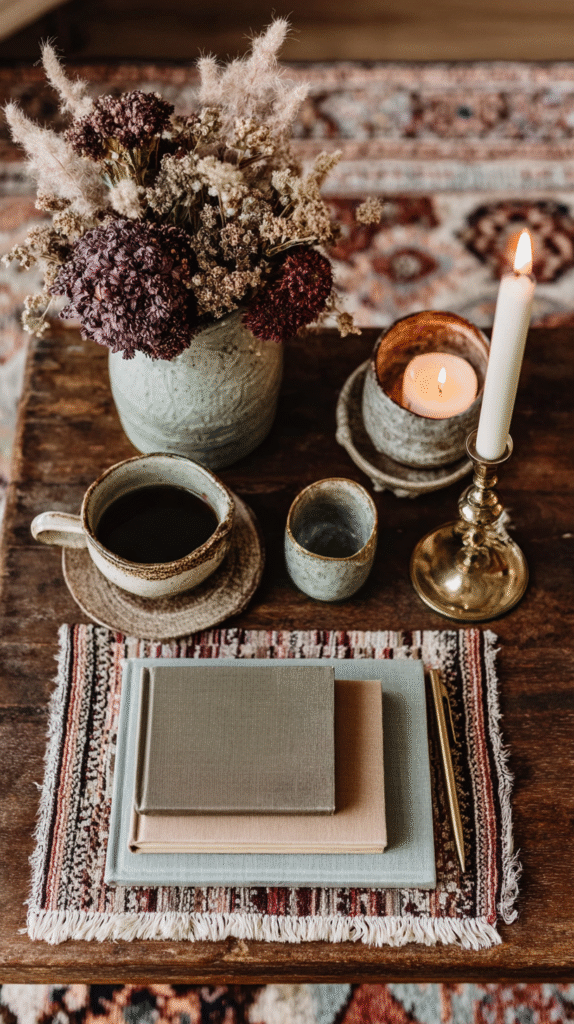
Before adding objects, clear the surface completely and start with intention. What do you use often, and what brings you joy to see? Maybe it’s a ceramic cup holding pens, a small vase with dried flowers, or your favorite notebook.
Keep what serves your creative rhythm, and let go of the rest.
Instead of filling every inch, allow for breathing space. Place objects in small clusters of three or five. Let the eye rest on one focal point, a bouquet, a framed piece of art, or a typewriter on the desk. Simplicity has presence.
Don’t hide your materials. Vintage jars, baskets, or bowls make perfect storage for tools and supplies. Displaying them beautifully reminds you that creativity belongs in everyday life.
Over time, the mix of useful and decorative objects will tell your personal story.
Add Layers of Texture and Life
Texture is what makes a space feel lived-in and comforting. Incorporate tactile materials like woven baskets, ceramic vases, linen napkins, or an old wool cushion. These natural textures balance the visual weight of wood and metal.
Bring in a touch of nature, too. A branch in a tall vase, a bundle of dried wildflowers, or a potted plant can soften the space instantly. If you love the look of flowers but not the upkeep, dried arrangements or foraged greenery will give the same effect with less effort.
Let time do part of the decorating. As seasons change, update your corner subtly, replace flowers, rotate art, or swap a lamp shade. The space should evolve like your creativity does.
Make It Work in a Small Apartment
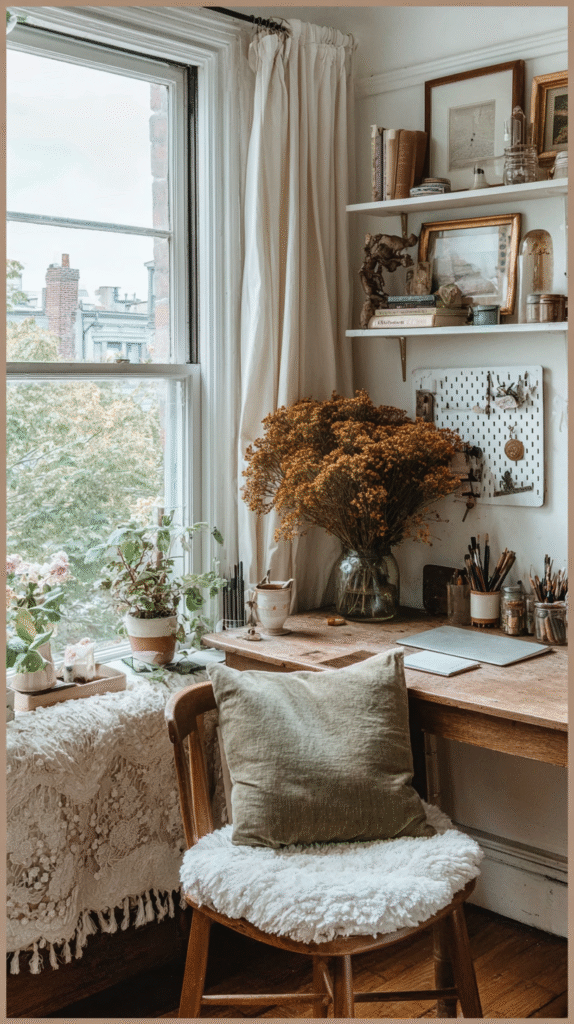
You don’t need a spare room to have a creative corner. Even a small wall section can become a haven with the right approach. If floor space is limited, try a floating shelf or a wall-mounted desk that folds down when needed.
Use vertical space for function and beauty. Hang a small shelf for supplies or a pegboard with clips for notes and inspiration. Display your favorite images or magazine tears as an evolving mood board.
Consider portability, too. A rolling cart can hold supplies and be tucked away when you’re done. A tray or basket can serve as a mobile workspace that moves wherever light and mood feel right.
Build a Ritual Around It
Once your corner is styled, let it become part of your daily rhythm. Sit for ten minutes in the morning with coffee and a journal, or wind down at night writing letters or sketching. Regular use transforms the space from something styled into something alive.
If you ever feel it growing stagnant, shift one small thing, a new piece of art, a different lamp, a fresh flower. These updates keep your environment inspiring.
Remember that creativity thrives in comfort, not perfection. The goal isn’t to have a corner worthy of a magazine, but a place that makes you exhale when you sit down.
Closing Reflection
A vintage-inspired creative corner is less about design and more about feeling at home with your imagination. It’s a conversation between beauty and function, past and present, where everything has a story and nothing feels forced.
You don’t need to style it all at once. Start with one piece that speaks to you like an old desk, a chair with charm, or a favorite print.
Let the space unfold gradually, layer by layer. Over time, it will become not just a corner in your home, but a reflection of your creative life.