This post may contain affiliate links, including those from Amazon Associates. If you make a purchase through these links, I may earn a commission at no additional cost to you. Learn more about our affiliate policy.
A dark academia reading nook feels like stepping into a story, the scent of old pages, the flicker of candlelight, and the quiet weight of time held within well-worn objects.
It’s where mystery meets comfort, blending the moody charm of vintage libraries with the intimacy of a small, lived-in space.
You don’t need grandeur or excess to create this atmosphere. The key lies in resourceful layering through textures, tones, and thrifted details that feel poetic and a little nostalgic.
Here’s how to craft a reading nook that feels elegant, grounded, and deeply personal, no matter the size of your home.
Begin With Mood and Light
Start by choosing the feeling you want your nook to hold. Dark academia is rich with atmosphere, think dimly lit corners, weathered books, and tactile materials that invite slow moments. Aim for depth and warmth rather than brightness.
Position your nook where light feels soft and directional like near a window with sheer curtains for natural shadow play, or in a corner where lamplight pools gently.
Choose bulbs that cast a golden or amber glow, steering clear of harsh white light.
This aesthetic thrives on layered lighting. Combine a thrifted floor lamp with a small table lamp or wall sconce, and add candlelight for texture.
Let the interplay of shadows give your nook the romantic depth that defines dark academia.
Gather Thrifted Furniture With History
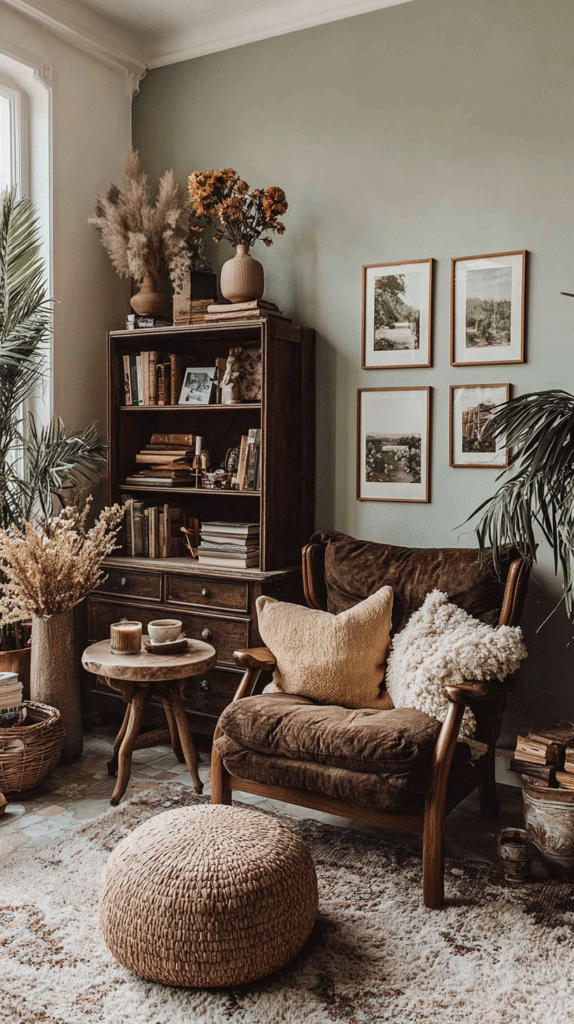
Thrift stores are treasure troves for pieces that bring soul and story to a space. Look for a chair or loveseat with curved lines, wood details, or worn fabric that feels inviting rather than perfect. A petite armchair in velvet or tweed instantly captures that scholarly charm.
Add a small side table or vintage stool to hold your books and tea. Hunt for solid wood furniture with patina, a little imperfection adds authenticity. If you find a piece that feels too modern, sand it lightly and apply a dark stain or paint it in an aged hue like espresso, oxblood, or moss.
Every piece should feel grounded and substantial, even if your space is small. These furnishings anchor the nook and give it weight and presence.
Layer Textures and Tones
Dark academia décor feels best when it’s tactile. Think velvet, linen, wool, and aged wood, all layered in deep, earthy colors.
Start with a rug or blanket in rich tones like chestnut, plum, or olive. Drape a throw over your chair, and pile on a few thrifted pillows in complementary fabrics.
Contrast softness with structure. A metal reading lamp, ceramic vase, or wooden frame balances the textiles. Look for details that feel crafted rather than polished—hammered brass, embossed leather, carved wood.
Don’t worry about perfect matches. A sense of curation, objects collected over time, creates the layered warmth that defines this look.
Style Your Books and Objects Like Art
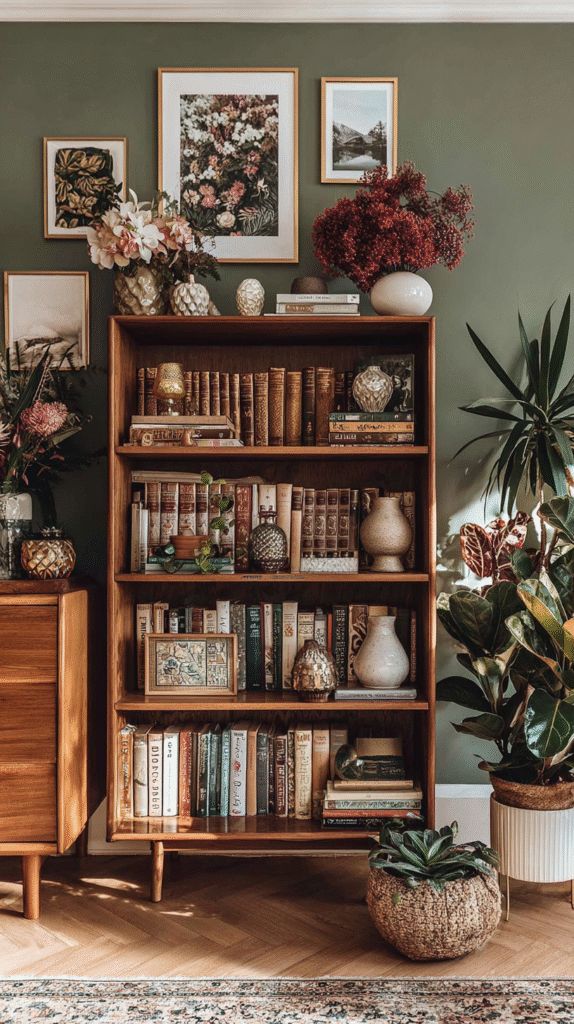
Books are at the heart of any dark academia nook, but how you display them shapes the mood. Stack a few hardcovers horizontally to use as risers for candles or small sculptures. Line others vertically in neat clusters, mixing muted spines with darker tones.
Thrifted items like old clocks, candlesticks, framed art, or a typewriter, add depth and narrative. Combine them on your shelves or tabletop in small vignettes. A brass tray holding a candle, magnifying glass, and pocketbook tells a quiet story of its own.
If your nook feels too heavy, add balance with natural elements: a sprig of eucalyptus in a glass bottle, a bundle of dried herbs, or a simple green plant in a terracotta pot. Nature adds a subtle softness that keeps the look from feeling static.
Dive deeper into Dark Academia thrifting and bookshelf styling with this tutorial from Krysta Meeker:
Create an Atmosphere for Reading and Reflection

Every element should invite you to linger. Keep a wool blanket folded nearby, a stack of current reads within reach, and a small dish for bookmarks or loose tea leaves.
Sound and scent matter too. A crackling fireplace playlist, the faint aroma of cedar or tobacco candle, the clink of a spoon in a mug, these sensory details transform a corner into a world.
Even if your space is small, let it feel abundant with intention. The focus isn’t on size but on immersion, a place where every texture and shadow feels like part of the same thought.
Add Personal Details That Tell Your Story
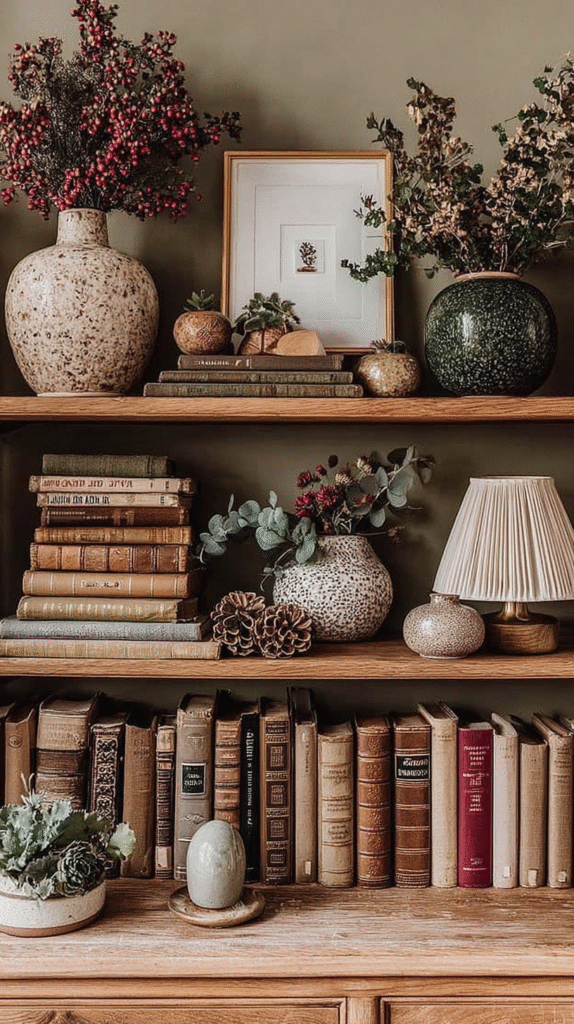
The dark academia aesthetic comes alive when it reflects the person within it. Frame a handwritten quote or a favorite poem. Display old letters, sketches, or vintage postcards. These fragments of memory give your space meaning beyond decoration.
Also remember to add in some tasteful natural decor like rich red dried flowers, stones or seasonal objects like pinecones.
You can also thrift small art prints or use book pages as wall décor. Choose pieces that evoke emotion like sepia photographs, moody landscapes, or abstract sketches. Pin them in clusters or lean them casually against the wall for an undone, scholarly charm.
Over time, your reading nook becomes a living scrapbook of who you are: part study, part sanctuary, part creative workshop.
Trust the Process of Curation
Creating a dark academia nook is less about decorating and more about discovering. Let the process unfold slowly. Visit thrift stores often, collecting items that feel right rather than rushing to finish.
Every object you choose adds a note to the story your space tells. The creased spine of a secondhand book, the gleam of a vintage lamp, the quiet flicker of candlelight—all these details layer meaning over time.
With each addition, your nook becomes more alive, more intentional, more yours.
Closing Reflection
A dark academia reading nook is an invitation to pause—to think, to feel, to immerse yourself in beauty shaped by time. It’s proof that elegance doesn’t require newness, only discernment and care.
Start with one corner, one chair, one book. Then let your creativity lead you, piece by piece. Soon, you’ll find yourself drawn to this moody, comforting space where stories come to life and time seems to slow.